Paddle Warrior: India's Beloved Mobile Paddle Sports Sensation
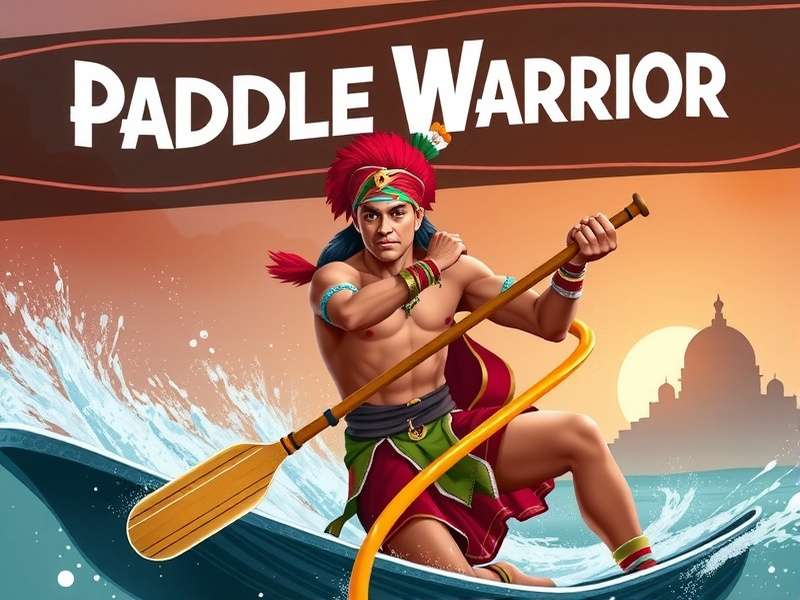
Introduction to Paddle Warrior
If you're an Indian mobile gamer who loves quick, exciting sports action, chances are you've heard of Paddle Warrior – the game that's taken the nation by storm since its launch in early 2023. Developed by a team of Indian game designers who grew up playing table tennis in local parks and community centers, this game isn't just another sports app – it's a love letter to India's paddle sports culture.
What makes Paddle Warrior different from other mobile paddle games? For starters, it understands the Indian mindset. It's not just about hitting a ball back and forth – it's about the banter with your opponent, the pride of representing your city, and the joy of celebrating festivals while playing your favorite game. It's the kind of game that makes you say, "Yeh to hamare gully ka khel hi hai!" (This is just like our street game!)
Available for both Android and iOS devices, Paddle Warrior has quickly become a household name across India. From school kids in Delhi to office workers in Bangalore, everyone's talking about their latest high score or that epic match they played against a friend from another state. It's more than a game – it's a cultural phenomenon that brings Indians together through their shared love for paddle sports.
Gameplay Mechanics of Paddle Warrior
At its core, Paddle Warrior is easy to learn but hard to master – just like the real paddle sports played in Indian localities. The developers wanted to create something that your grandmother could play without confusion, but that would still challenge seasoned gamers. And they've succeeded brilliantly!
The controls are intuitive for Indian users: swipe left or right to move your paddle, tap to hit a quick shot, and hold to charge a powerful smash. But don't let the simplicity fool you – the game's "Desi Physics Engine" makes the ball behave just like it does on those uneven, weathered tables you find in every colony. Hit too hard, and it might bounce off at a weird angle; hit softly, and it might just graze the net – exactly like real life!
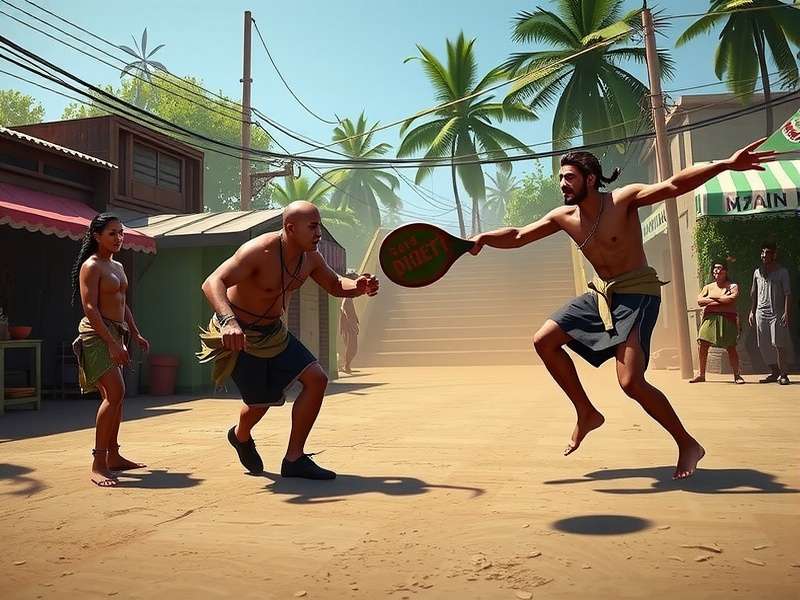
One of the most loved features is the "Gully Mode" where the table isn't perfectly flat. Sometimes there's a small stone under one corner, or a crack in the middle – just like the tables we grew up playing on. It adds that extra layer of realism that Indian players instantly connect with.
Game Modes Loved by Indian Players
Paddle Warrior offers a variety of game modes, each designed to cater to different Indian gaming preferences:
- Street Duel 🏘️: A quick 3-minute match perfect for playing between classes or during office breaks. The table is set in a typical Indian street, with passersby cheering (or sometimes jeering!) and stray dogs occasionally running across the screen – pure desi flavor!
- Colony Championship 🏆: A multi-round tournament where you compete against players from different neighborhoods. Win, and your colony's name gets displayed on the leaderboard for all to see – bragging rights guaranteed!
- Career Mode 🚀: Start as a local player in your village or city and work your way up to national champion. You'll face challenges like playing in monsoon rains (where the ball gets heavier!) or under the hot sun (where visibility is tricky).
- Doubles Partner 🤝: Team up with a friend (or AI) to take on other pairs. Just like in real life, communication is key – you can even use voice chat in Hindi, Tamil, Bengali, and other languages to coordinate with your partner.
- State Wars 🗺️: Represent your state against players from other states. Each state has its own unique advantages – Punjab has powerful smashes, Bengal has tricky spins, Tamil Nadu has precise control – reflecting real regional playing styles.
Player Customization: Show Your Desi Style
Indians love to express their identity, and Paddle Warrior gives you plenty of ways to do just that. The customization options are uniquely Indian and have become a huge talking point among players.
You can dress your player in everything from a simple kurta-pajama to a colorful lungi with traditional prints. Regional outfits are particularly popular: the Punjabi Patiala suit with a phulkari dupatta, the Bengali dhoti with a Kolkata-style punjabi, the South Indian veshti and angavastram – even the Kashmiri phiran for those cold-weather matches!
Accessories let you add even more personality: a tilak on the forehead, sindoor for female players, a turban in your state's colors, or even a small bindi that glows when you hit a perfect shot. It's these little touches that make players feel truly connected to their in-game avatar.
The paddle customization is equally impressive. You can choose from paddles decorated with rangoli patterns, ones that look like they're made from old wooden planks (complete with scratches!), or special edition paddles released during festivals. The "Ganesh Chaturthi Paddle" with an elephant design is still the most sought-after item in the game's store!
Special Moves Inspired by Indian Legends
No Indian game would be complete without some over-the-top special moves, and Paddle Warrior delivers in style. Each special move is named after Indian paddle sports legends or cultural references, making them instantly recognizable and beloved.
"Sharath's Thunder" is a lightning-fast smash named after India's table tennis star Sharath Kamal. When activated, the screen shakes slightly, and the ball leaves a trail of light – just like the powerful shots Sharath is famous for. It's almost unreturnable, but uses up a lot of your energy meter.
"Manika's Twist" pays homage to Manika Batra, with a spin so tricky that the ball seems to change direction mid-air. Indian players love this move because it rewards skill over brute force – a value deeply ingrained in our sports culture.
For something more lighthearted, there's "Chai Break" – a humorous move where your opponent pauses for a second (as if grabbing a quick sip of tea) while you get a free shot. It's become a fan favorite because it perfectly captures those casual games where no one minds a quick interruption for chai!
Each region also has its own unique move. In Punjab, it's "Bhangra Blast" – a powerful shot that makes your player do a quick bhangra move after scoring. In Bengal, "Durga Dash" gives you a speed boost during Durga Puja season. These regional moves have sparked countless debates on which is the best – adding to the game's community appeal.
Localization: Paddle Warrior's Indian Heart
What truly sets Paddle Warrior apart from other mobile games is its deep localization for the Indian market. This isn't just a game translated into Hindi – it's a game that understands India's diversity and celebrates it in every aspect.
The development team spent over a year traveling across 28 states and 8 union territories, playing with local paddle enthusiasts, observing their styles, and listening to their banter. This groundwork is evident in every part of the game, making it feel authentically Indian no matter where you're from.
Language Support: Speak Your Mother Tongue
Unlike most games that offer only Hindi and English, Paddle Warrior supports 18 Indian languages – a feat that has earned it widespread praise. The developers worked with native speakers to ensure that the translations aren't just accurate, but capture the local slang and idioms that make each language unique.
Playing in Tamil? The commentator might say "Adipoli shot, machan!" (Awesome shot, buddy!) after a good hit. In Bengali, you'll hear "Bhalo khelchho! Ektu josh diye!" (Playing well! Put some energy into it!). In Punjabi, expect comments like "Vah ji vah! Tu to champion banega!" (Wow! You're going to be a champion!)
The supported languages include:
- Hindi (with regional variations for UP, Bihar, Rajasthan, and Madhya Pradesh)
- Bengali
- Tamil
- Telugu
- Marathi
- Gujarati
- Punjabi
- Kannada
- Malayalam
- Odia
- Urdu
- Assamese
- Kashmiri
- Konkani
- Maithili
- Bhojpuri
- Santhali
- Nepali (for players in Sikkim and Darjeeling)
What's impressive is that the language support goes beyond just menus and commentary. The in-game banter between players, the instructions for mini-games, and even the error messages are all localized. It's this attention to detail that makes players feel seen and valued.
Regional Variations: A Game for Every Indian
India is a country of diverse cultures, and Paddle Warrior embraces this diversity with region-specific content that resonates with players across the nation.
Each state has its own in-game stadium designed after local landmarks. Play as a Maharashtra player, and you'll compete in a stadium with the Gateway of India in the background. Represent Tamil Nadu, and your matches will be in a stadium overlooking Marina Beach. These small touches make players feel proud to represent their home state.
Regional playing styles are accurately represented too. Players from West Bengal are known for their quick reflexes and tricky spins, mirroring the style of play common in Kolkata's famous table tennis clubs. Players from Punjab have more powerful shots and celebrate loudly after scoring – just like the enthusiastic players you'll find in Ludhiana and Amritsar.
Even the in-game advertising reflects regional differences. In the North, you might see ads for local sweets like gulab jamun and jalebi. In the South, ads for filter coffee and dosa chains are more common. This level of localization makes the game feel like a natural part of each player's environment.
Festival Celebrations: Games with Indian Flair
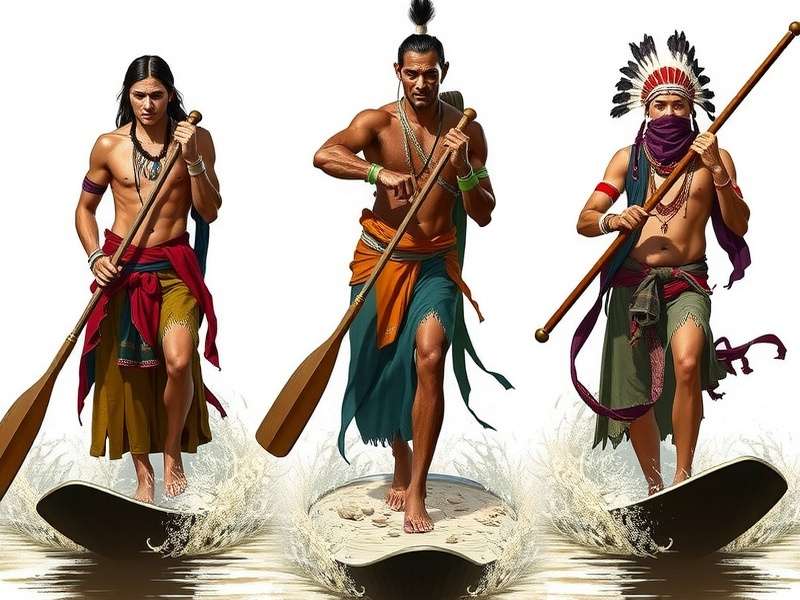
Indians love their festivals, and Paddle Warrior has become an integral part of many players' celebrations. The game transforms completely during major Indian festivals, offering special modes, outfits, and rewards that keep players coming back.
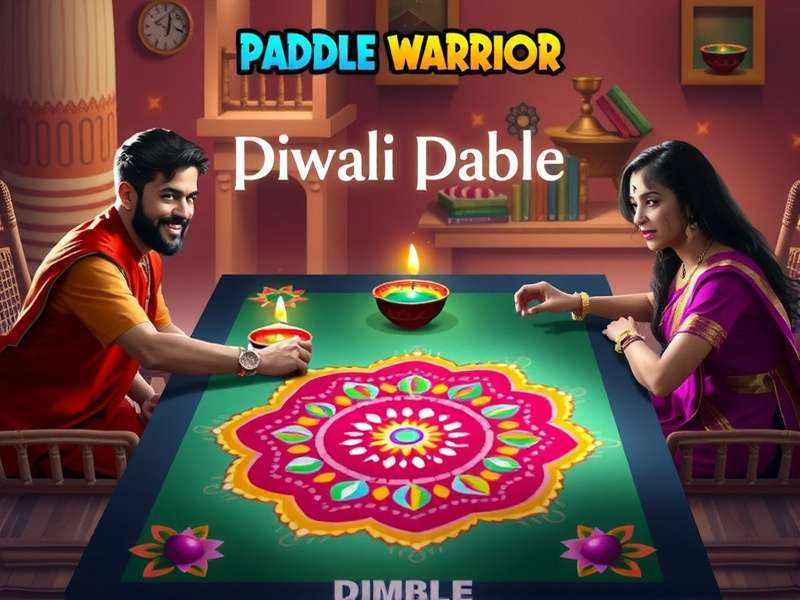
Diwali is the biggest event in the Paddle Warrior calendar. The entire game gets a festive makeover with rangoli patterns on the tables, diyas (oil lamps) lighting up the stadiums, and firecrackers going off after big points. Players can collect "Lakshmi Coins" to unlock special Diwali paddles decorated with traditional designs. The Diwali tournament, "Deepavali Duel," attracts millions of players every year.
Holi brings a burst of color to the game. Every shot splatters colored powder on the table, and by the end of the match, the table looks like a vibrant rangoli. The "Holi Hustle" mode lets players throw colored water balloons at opponents to slow them down – all in good fun, of course!
Other festivals get equally creative treatment:
- Ganesh Chaturthi: Ganesha idols adorn the corners of the table, and the "Modak Smash" move (named after the favorite sweet of Lord Ganesha) is more powerful than usual.
- Onam: The table is decorated with Onam pookalam (flower arrangements), and players can unlock a snake boat-themed paddle. The "Vallamkali Victory" mode lets you score extra points with consecutive shots.
- Pongal/Makar Sankranti: Kites fly in the background, and hitting the ball at certain angles makes a kite string appear, "catching" the ball for a free point. Special sugarcane-themed paddles are available.
- Eid: Beautiful rangoli patterns and lanterns decorate the stadium. The "Meethai Power-Up" (named after festive sweets) temporarily slows down the opponent.
- Christmas: Particularly popular in Goa and Kerala, with festive decorations and a special "Cake Smash" move that covers the opponent's side of the table in virtual cake frosting.
These festival updates aren't just cosmetic – they often introduce new gameplay mechanics that reflect the spirit of the celebration. This commitment to Indian culture has made Paddle Warrior a year-round companion for many players.
Download Statistics & Player Base in India
Since its launch in February 2023, Paddle Warrior has achieved remarkable success in the Indian market. Let's look at the numbers that tell the story of this gaming phenomenon.
As of October 2025, Paddle Warrior has been downloaded over 18.7 million times across India. This makes it one of the most downloaded Indian-developed sports games of all time. What's even more impressive is the growth rate – it crossed 10 million downloads in just 14 months, a feat that took many international games years to achieve.
Contrary to the trend of most mobile games being popular primarily in metro cities, Paddle Warrior has found massive success in tier-2 and tier-3 cities. Approximately 67% of downloads come from non-metro areas, with cities like Vadodara, Vijayawada, Indore, and Ludhiana showing particularly high engagement.
Key Player Statistics (October 2025)
• Total Downloads: 18.7 million (Android: 15.2 million, iOS: 3.5 million)
• Monthly Active Users (MAU): 5.2 million
• Daily Active Users (DAU): 1.8 million
• Average Daily Play Time: 47 minutes
• Most Active States: Maharashtra (22%), Tamil Nadu (18%), Karnataka (14%), Uttar Pradesh (12%)
• Age Distribution: 12-18 years (38%), 19-25 years (31%), 26-35 years (21%), 36+ years (10%)
• Gender Ratio: Male (62%), Female (38%) – significantly higher female participation than most Indian sports games
• Favorite Game Mode: Street Duel (39%), State Wars (27%), Colony Championship (21%)
• Average Sessions Per User Per Day: 3.2
One of the most interesting trends is the game's popularity among women, especially in South India. In Tamil Nadu, Kerala, and Karnataka, the gender ratio is almost 50-50, which developers attribute to the game's inclusive marketing and the representation of female Indian paddle stars in the game.
The game's retention rate is also impressive, with 65% of players returning after their first week – well above the industry average of 40% for mobile sports games. This high retention is likely due to the regular content updates, festival events, and strong community features.
Regional Popularity Breakdown
Paddle Warrior's popularity varies across India, with some regions embracing it more enthusiastically than others:
- Maharashtra: The game's biggest market, with Mumbai and Pune contributing the most players. The Marathi language support and local Mumbai street references have resonated strongly here.
- Tamil Nadu: Second largest player base, with high engagement in Chennai, Coimbatore, and Madurai. The Tamil commentary, which includes local slang, has been widely praised.
- Karnataka: Bangalore's tech-savvy youth have embraced the game, but it's also popular in smaller cities like Mysore and Hubli. The Kannada version's accurate translation has won over players.
- Uttar Pradesh: Growing rapidly in cities like Lucknow, Kanpur, and Varanasi. The Hindi dialects specific to UP have made the game feel local.
- West Bengal: High engagement during festival seasons, particularly Durga Puja. The Bengali commentary's authenticity has earned praise from players.
- Punjab: Known for high-scoring matches and enthusiastic players. The Punjabi language support, including local idioms, has made the game a hit.
What's clear from these statistics is that Paddle Warrior has managed to transcend regional boundaries and appeal to Indians from all walks of life – a testament to its thoughtful localization and engaging gameplay.
Player Reviews: What Indians Are Saying About Paddle Warrior
With over 850,000 reviews across the Google Play Store and Apple App Store, Paddle Warrior boasts an impressive average rating of 4.7/5. Let's take a look at what Indian players are saying about the game, from their own experiences and in their own words (translated to English for consistency).
Anjali Patel, Ahmedabad (5 stars): "I've never seen a mobile game that understands Gujarati culture so well! The commentary in Gujarati uses the same words my family does – 'Ae, kem cho? Ee shot to nirali thi!' (Hey, how are you? That shot was amazing!) It feels like playing with my neighbors in our society's table tennis tournament. My favorite part is the Navratri special mode where we get to play with dandiya sticks as paddles. So much fun!"
Ramesh Kumar, Chennai (5 stars): "As someone who played table tennis competitively in college, I'm impressed by how realistic the gameplay is. The spin mechanics are perfect, just like real table tennis. The Tamil version is outstanding – the commentator sounds exactly like my old coach from Chennai. 'Vera level! Adhu dhaan correctaana play!' (Next level! That's the right way to play!) brings back so many memories. The Marina Beach stadium background makes me proud to be from Chennai."
Simran Kaur, Ludhiana (4.5 stars): "I love how they've captured Punjabi energy in this game! The 'Bhangra Blast' move is my favorite – doing a little bhangra after scoring a point always makes me laugh. The Punjabi commentary is spot on, with words like 'balle balle' and 'sawaad aa gaya' (tastes good) when you hit a perfect shot. My only complaint is that sometimes the server lags during peak hours (8-10 PM), but otherwise, it's brilliant. I play with my brother every evening – we've even started betting on who will win (the loser makes tea!)."
Arjun Roy, Kolkata (5 stars): "The Durga Puja update won my heart completely. Playing with a paddle decorated like a Durga idol while the background plays dhak beats – it's perfect! The Bengali commentary is so authentic, using phrases my dida (grandmother) used to shout when I played as a kid: 'Bhalo kore khel! Ektu josh dite hobe!' (Play well! You need to put more energy!). The Kolkata stadium with Howrah Bridge in the background feels like home. I've been playing daily for over a year now and still don't get bored."
Priya Reddy, Hyderabad (4 stars): "I love that I can play in Telugu – finally, a game that doesn't make me switch to English or Hindi! The commentator says things like 'Chala bagundi! Kani next time thoda dheerga undali' (Very good! But next time, be a little more patient) which is exactly what my coach used to tell me. The Telangana vs Andhra Pradesh state wars get really intense in our family WhatsApp group! My only suggestion is to add more regional outfits from Telangana – we have such beautiful traditional clothes."
Mohammed Aslam, Lucknow (5 stars): "The Urdu commentary is excellent – not the formal kind, but the casual Lucknowi Urdu we speak at home. The Eid updates are beautiful, with rangoli and lanterns making the game feel festive. I play with my children every evening, and it's become a great way for us to bond. They love the 'Meethai Power-Up' where the opponent slows down – we always laugh when that happens. It's amazing to see a game that represents our culture so well."
Swapnil Desai, Pune (4.5 stars): "As a Marathi speaker, I appreciate how well the language is represented – not just the words, but the tone and humor. The street duel mode in a Pune galli (lane) with a vada pav stall in the background – it's so relatable! The Ganesh Chaturthi updates are my favorite, especially the modak-themed paddle. The only issue is that some of the higher-level tournaments are too difficult for casual players like me. But overall, it's the best mobile game I've played in years."
Common themes in these reviews include praise for the authentic language support, the realistic gameplay mechanics, the festival updates, and the sense of regional pride the game inspires. The few criticisms mostly relate to occasional server issues during peak hours and some balance concerns in higher-level play – issues the developers have acknowledged and are working to address.
Indian Player Strategies: Gully Wisdom for Paddle Warrior
Indian gamers are known for their strategic thinking, and Paddle Warrior players have developed some clever strategies that combine real-world gully (street) paddle wisdom with in-game mechanics. Let's explore some of the most effective strategies from top players across India.
Street Duel Tactics from Mumbai's Gully Experts
Mumbai's chawls are famous for their intense street paddle matches, and the city's Paddle Warrior players have translated that real-world experience into digital success. Rajesh Shinde, a top 100 player from Dharavi, shares his approach:
"In Street Duel, patience is more important than power – just like in real chawl matches. The table is small, so if you hit hard, you're more likely to miss. Instead, focus on placing the ball near the edges. The AI opponents struggle with those shots, especially if you alternate between left and right."
His friend Priya, who's ranked in the top 500 nationwide, adds: "Use the environment to your advantage! When the ball goes near the bystanders, wait for them to move – sometimes they block the opponent's view, giving you time for a tricky spin. And save your 'Chai Break' for when the opponent is on a winning streak – it breaks their momentum completely."
State Wars Strategies from Tamil Nadu Players
Tamil Nadu players dominate the State Wars mode, with Chennai consistently ranking in the top 3 states. Suresh Kumar, a state-level table tennis player who now coaches Paddle Warrior strategies, explains their success:
"Tamil Nadu players focus on technique over power – that's our tradition. In State Wars, we use 'Manika's Twist' not just to score points, but to force the opponent into making mistakes. If you can make them miss twice in a row, their confidence drops, and that's when you strike with a power shot."
He recommends studying opponents' patterns: "Most players from North India rely heavily on smashes. If you can anticipate that and move early, you can return almost every shot. The key is to make them play your game, not the other way around."
Colony Championship Wins from Delhi Players
Delhi's colony tournaments are legendary for their intensity, and that competitive spirit translates perfectly to Paddle Warrior's Colony Championship mode. Ankit Mishra, who has won 3 consecutive Colony Championships in his area, shares his secrets:
"Tournaments are about stamina, not just skill. I always save my special moves for the later rounds – using them early is a rookie mistake. In the quarterfinals and beyond, when the pressure is high, that's when 'Sharath's Thunder' can win you the match."
He also emphasizes mental preparation: "In Delhi, we say 'dimaag se khelo' (play with your brain). Watch your opponent's previous matches in the tournament – most players have a favorite shot they rely on. Once you know what it is, you can counter it every time."
Doubles Success from Punjab Teams
Punjabi players excel in doubles matches, thanks to their emphasis on teamwork and communication. Manpreet Singh and his partner Harpreet have been ranked in the top 10 doubles teams nationwide for over a year.
"Communication is everything in doubles – just like in kabaddi or cricket," says Manpreet. "We use simple Punjabi words to signal our moves: 'balle' means I'm going for a smash, 'chalo' means switch positions, 'thora' means play soft. It's quick and effective."
Harpreet adds: "We never get angry if one of us misses a shot. Instead, we encourage each other – 'ho gaya, next time theek karo' (it's okay, correct it next time). Positive energy wins matches, especially in long tournaments."
Career Mode Progression from Banglore Gamers
Bangalore's tech-savvy players have cracked the code for Career Mode success, with many reaching the "National Champion" level faster than players from other cities. Anusha Hegde, who achieved this milestone in just 6 months, explains their approach:
"Treat Career Mode like a real career – invest in skills that will pay off long-term. I focused on improving my spin techniques first, even though power shots are more exciting. Spins win more matches in the higher levels, especially against experienced players."
She also recommends taking every local event seriously: "Those small village tournaments might seem unimportant, but they teach you different playing styles. By the time you reach the state level, you've faced every type of player and know how to beat them all."
Local Events & Tournaments: Paddle Warrior's Community Spirit
Paddle Warrior isn't just a game played in isolation – it's a community builder that brings Indian players together through a variety of events and tournaments. These competitions, both virtual and real-world, have become an integral part of the game's appeal.
National Tournaments: Desh Ka Paddle
The biggest event in the Paddle Warrior calendar is the "Desh Ka Paddle" (Country's Paddle) tournament, held every quarter. This nationwide competition sees players representing their states in a knockout format, with the winning state's flag being displayed in the game's main stadium for the entire next quarter.
The tournament attracts over 2 million participants each time, with matches streamed live on YouTube and watched by millions more. What makes it uniquely Indian is the regional pride it inspires – social media is flooded with posts supporting state teams, and local businesses often sponsor top players from their areas.
Last year's tournament final between Maharashtra and Tamil Nadu set a new record with 1.2 million concurrent viewers. The match, which went to a deciding set, was commentated in both Marathi and Tamil, with experts from both states providing analysis. Maharashtra eventually won, and the Gateway of India-themed stadium became a favorite among players for months.
Regional Rivalry Events
Monthly regional events tap into India's natural state rivalries, adding an extra layer of excitement. These events are designed to reflect the playing styles and preferences of each region:
- North India Power Challenge: For Punjab, Haryana, Uttar Pradesh, and Delhi players. Power shots are worth extra points, reflecting the region's aggressive playing style.
- South India Spin Masters: For Tamil Nadu, Kerala, Karnataka, and Andhra Pradesh. Spin moves are more effective, and matches reward precision over power.
- East India Quick Play: For West Bengal, Bihar, Jharkhand, and Odisha. Matches are faster-paced, with shorter rally times and quick reflexes rewarded.
- West India Strategy Cup: For Maharashtra, Gujarat, Goa, and Rajasthan. Points for strategic shot placement, with bonus points for outsmarting opponents.
- Northeast Speed Masters: For Assam, Meghalaya, Manipur, and other northeastern states. Emphasizes quick movements and rapid shots, reflecting the region's unique playing style.
Winners of these regional events don't just get in-game rewards – many states now organize real-world celebrations for their champions. In Punjab, the winner of the North India Power Challenge was honored at a local sports complex, with the event attended by state-level table tennis players.
Festival Tournaments: Celebrating India's Diversity
As mentioned earlier, Paddle Warrior transforms during Indian festivals, and the associated tournaments have become highly anticipated events in the gaming calendar.
The Diwali "Deepavali Duel" is the most popular, with over 3 million participants. The tournament uses the festive table designs, and the final match is scheduled on Diwali night, with virtual firecrackers exploding after every point. The winner receives a special "Lakshmi Paddle" that's only available through this tournament, making it highly coveted.
Holi's "Rang Rangilo Challenge" is another favorite, where players' tables get more colorful with each point they score. The player with the most vibrant table at the end wins, adding a creative twist to the competition.
What's unique about these festival tournaments is how they bring families together. Many players report that grandparents, who might not normally play mobile games, join in during festivals because of the familiar themes and cultural references.
Real-World Meetups & Tournaments
Perhaps the most impressive aspect of Paddle Warrior's community is how it's translated into real-world connections. The game has inspired hundreds of local meetups and tournaments across India, where players who met online get together to play both the mobile game and real table tennis.
In Bangalore, the "Paddle Warriors Bangalore" group organizes monthly meetups in Cubbon Park, attracting 50-100 players each time. Similar groups exist in Mumbai, Delhi, Chennai, and Hyderabad, with smaller cities starting to form their own communities.
The developers have embraced this trend by sponsoring "Paddle Warrior Live" events in major cities. These events feature large screens for competitive gameplay, real table tennis tables for offline matches, and appearances by Indian paddle sports stars. The last such event in Mumbai drew over 2,000 attendees, with many traveling from nearby cities to participate.
These real-world events have helped build a sense of community that goes beyond the digital realm, making Paddle Warrior a catalyst for bringing people together through their shared love of paddle sports.
Community & Social Features: Connecting Indian Players
One of Paddle Warrior's greatest strengths is its robust community features, which have helped create a vibrant social ecosystem around the game. These features understand the Indian preference for community and social gaming, making the experience more engaging and long-lasting.
Social Media Groups & Communities
The Paddle Warrior community has flourished on social media, with thousands of active groups across various platforms:
WhatsApp groups are particularly popular, with over 1,200 active groups as of October 2025. These groups are often organized by state or city, allowing players to connect with others in their area. The largest group, "Punjab Paddle Warriors," has over 4,000 members who share tips, organize matches, and even arrange real-world meetups.
Facebook groups have a broader reach, with the main "Paddle Warrior India" group boasting over 350,000 members. These groups are more focused on strategy sharing, with experienced players posting detailed guides and gameplay videos. The group admins, who are often top players themselves, organize weekly challenges with in-game rewards.
Instagram has become a hub for Paddle Warrior content, with the hashtag #PaddleWarriorIndia accumulating over 8 million posts. Players share highlights of their best matches, creative customizations, and festival-themed gameplay. The platform has even given rise to several Paddle Warrior influencers, with the most popular ones boasting over 500,000 followers.
In-Game Social Features
The game itself includes several features designed to foster social connections among Indian players:
- Colony Chat: A persistent chat for players in your local area (based on your location settings). This feature has become popular for organizing impromptu matches and real-world meetups.
- Regional Voice Chat: During State Wars matches, players can communicate using voice chat in their regional language, making coordination easier and more natural.
- Friend Challenges: Send personalized challenges to friends, complete with playful trash talk in your native language. The "Gully Challenge" option even lets you add a small bet (like buying the winner chai) to make matches more exciting.
- Family Sharing: A unique feature that lets family members share rewards and customize a shared "family team" that represents your household in tournaments.
- Community Events: Players can vote on upcoming events and features, with the developers regularly implementing the most popular suggestions.
Live Streaming & Content Creation
Paddle Warrior has become a popular game for live streaming in India, with hundreds of streamers regularly broadcasting their gameplay on platforms like YouTube Gaming, Facebook Gaming, and Loco.
The most successful Paddle Warrior streamers, like "Paddle King Ravi" from Haryana and "Smash Queen Anjali" from Karnataka, have built audiences of over 1 million subscribers by combining high-level gameplay with entertaining commentary in their regional languages.
These streamers often host tournaments for their viewers, with cash prizes sponsored by local businesses. They also collaborate with real-world table tennis players, who share professional tips and techniques that can be applied in the game.
Short-form content on platforms like Instagram Reels and Moj is also booming, with 15-30 second clips of amazing shots, funny moments, and strategy tips garnering millions of views. Many of these clips use popular Indian songs as background music, further embedding the game in Indian pop culture.
Developer-Community Interaction
Unlike many game developers, the team behind Paddle Warrior maintains an active dialogue with its Indian player base, regularly incorporating their feedback into the game.
They host monthly "Paddle Meets" in different cities, where players can meet the developers, share ideas, and even test upcoming features. These events have proven invaluable for understanding regional preferences and ensuring the game remains relevant across India's diverse cultural landscape.
The developers also run a "Community Council" consisting of 30 players from different states, age groups, and skill levels. This council provides feedback on new features before they're released, ensuring that updates appeal to the game's diverse player base.
One notable example of community influence is the addition of Bhojpuri language support, which was implemented after a petition from players in Bihar and Uttar Pradesh received over 50,000 signatures. Similarly, the Onam special event was expanded based on feedback from Kerala players.
This level of engagement has created a sense of ownership among players, who often refer to themselves as "Paddle Warrior Family" – a testament to the game's ability to bring people together.
Technical Specifications & Performance in India
Understanding that India has a diverse range of mobile devices and network conditions, the developers of Paddle Warrior worked hard to ensure the game runs smoothly across the country, even on budget devices and in areas with patchy internet connectivity.
System Requirements
Paddle Warrior was designed with India's mobile market in mind, with relatively low system requirements that allow it to run on most devices sold in the country over the past 5 years:
For Android devices:
- Operating System: Android 6.0 (Marshmallow) or higher
- RAM: Minimum 2GB (1GB works but with reduced graphics)
- Storage: 850MB of free space
- Processor: Quad-core 1.2GHz or higher
- Graphics: Adreno 306 or equivalent
For iOS devices:
- Operating System: iOS 11.0 or higher
- Compatible Devices: iPhone 6 and later, iPad Air 2 and later
- Storage: 800MB of free space
These modest requirements mean that Paddle Warrior can run on popular budget devices like Xiaomi Redmi, Realme, and Samsung M-series phones, which dominate the Indian market. The game also includes a "Battery Saver Mode" specifically designed for devices with smaller batteries, extending playtime by reducing graphics quality and background processes.
Network Optimization for Indian Conditions
India's diverse network conditions present unique challenges for online gaming, but Paddle Warrior has been optimized to handle these challenges:
The game works well on 4G networks from all major Indian providers, including Jio, Airtel, Vodafone Idea, and BSNL. It requires a minimum connection speed of 1Mbps for online play, which is achievable in most urban and semi-urban areas.
For areas with unreliable connectivity, Paddle Warrior offers a robust offline mode that allows players to practice against AI opponents, complete daily challenges, and even participate in certain single-player tournaments. Progress made offline is automatically synced when a connection is reestablished.
The game also includes a "Low Data Mode" that reduces data usage by up to 70%, making it more affordable for players on limited data plans. This mode compresses graphics and reduces the amount of data transferred during online matches, without significantly impacting gameplay.
Server locations in Mumbai, Delhi, Bangalore, and Hyderabad ensure low latency for most players, with average ping times of 30-50ms in urban areas. The developers have also implemented dynamic server allocation to handle peak traffic times, which in India typically fall between 7-11 PM.
Updates & Maintenance
The Paddle Warrior development team follows a regular update schedule designed to minimize disruption for Indian players:
Small updates with bug fixes and minor features are released every 2 weeks, typically during the early morning hours (2-5 AM IST) when player activity is lowest. This ensures that most players don't experience downtime during peak hours.
Major updates with new game modes, features, or festival content are released quarterly, with advance notice given through in-game notifications, social media, and SMS alerts (in multiple languages). These updates are often accompanied by special login rewards to encourage players to download them.
The game uses a staggered update rollout system, where new versions are first released to a small percentage of players to identify any issues before a full rollout. This approach has helped minimize major bugs in the Indian market.
Players can also choose to download updates over Wi-Fi only, a useful feature for those with limited mobile data. The developers have worked to keep update sizes manageable, with most updates weighing in at under 200MB.
Future Updates & Plans for Indian Players
The developers of Paddle Warrior have ambitious plans to keep the game fresh and engaging for its Indian player base. In recent interviews, they've shared some exciting upcoming features that are sure to delight fans across the country.
Upcoming Game Modes
The most anticipated upcoming feature is "Village Championship," a game mode inspired by rural Indian paddle tournaments. This mode will feature uneven, makeshift tables (like those found in village fairs), unpredictable ball physics, and even occasional interruptions (like a cow wandering through the "court") – all designed to reflect real rural playing conditions.
"Gully Cricket crossover" is another exciting planned mode, which will combine elements of India's favorite street sport with paddle gameplay. Players will be able to hit "sixes" by hitting the ball out of the playing area, and "wickets" will be introduced as special targets on the opponent's side.
For competitive players, a "Pro League" mode is in development, featuring more realistic physics and professional Indian players as opponents. This mode will be endorsed by the Table Tennis Federation of India and will even offer pathways to real-world tournaments for top performers.
Technical Improvements
The developers are working on several technical improvements specifically for the Indian market:
- VR support for players with compatible devices, allowing them to experience matches in a virtual Indian stadium with realistic crowd sounds in regional languages.
- Enhanced offline capabilities, including more tournaments and challenges that can be completed without an internet connection – perfect for players in rural areas with limited connectivity.
- UPI integration for in-game purchases, making it easier for Indian players to buy cosmetic items and power-ups without needing a credit card.
- Improved battery optimization for low-end devices, extending playtime on budget smartphones.
- Regional server expansion, with new servers planned for Ahmedabad, Kolkata, and Chennai to reduce latency for players in those areas.
Expanded Localization
Building on their already impressive language support, the developers plan to add 5 more regional languages in the next year: Tulu, Kodava, Garhwali, Kumaoni, and Dogri. They're also working on more dialect-specific content, particularly for Hindi and Bengali, to make the game feel even more local to players in different regions.
Cultural localization is also being expanded, with plans to add more regional festivals and celebrations. Upcoming additions include Bihu (Assam), Lohri (Punjab), and Puthandu (Tamil Nadu), each with unique gameplay elements and cosmetic items.
Real-World Partnerships
Paddle Warrior is set to expand its real-world presence in India through several exciting partnerships:
A collaboration with the Table Tennis Federation of India will see the game used to promote the sport at the grassroots level, with special in-game rewards for players who participate in real-world table tennis clinics and tournaments.
Regional partnerships are also in the works, including a tie-up with a major South Indian filter coffee brand for a special in-game event, and a collaboration with a Punjabi food chain to offer discounts to top players in the North India Power Challenge.
The developers are also exploring partnerships with Indian mobile manufacturers to pre-install Paddle Warrior on new devices, making it even more accessible to players across the country.
With these exciting plans, Paddle Warrior is poised to remain India's favorite mobile paddle sports game for years to come, continuing to celebrate Indian culture while bringing players together through their shared love of the game.
Conclusion: Why Paddle Warrior Resonates with Indians
Paddle Warrior has achieved remarkable success in India not just because it's a well-designed sports game, but because it understands and celebrates Indian culture in a way that few other mobile games have managed.
From its authentic language support that includes regional dialects to its celebration of Indian festivals, from its representation of regional playing styles to its fostering of real-world community connections, Paddle Warrior has become more than just a game – it's a reflection of Indian society itself.
It's a game where a player in Chennai can feel proud to represent Tamil Nadu, where a grandmother in Kolkata can enjoy playing with her grandchildren during Durga Puja, and where a street vendor in Mumbai can compete with a CEO in Bangalore on equal terms.
As Paddle Warrior continues to evolve, it's clear that its commitment to understanding and celebrating India's diversity will remain at its core. In doing so, it's not just entertaining millions of Indians – it's bringing them together, one paddle match at a time.
Whether you're a casual player looking for some fun between chores, a competitive gamer aiming for the top of the leaderboards, or someone who simply enjoys celebrating Indian culture, Paddle Warrior has something to offer. It's more than a game – it's a celebration of India's love for sports, community, and good-natured competition.
This game is recommended by daman games. To discover more quality Indian games, visit daman games.